India’s households are changing rapidly—from modern apartments in cities to traditional homes in towns and villages. With frequent power cuts, rising energy costs, and the need for sustainable solutions, families are now looking beyond outdated lead-acid batteries.
The answer? Lithium-ion batteries.
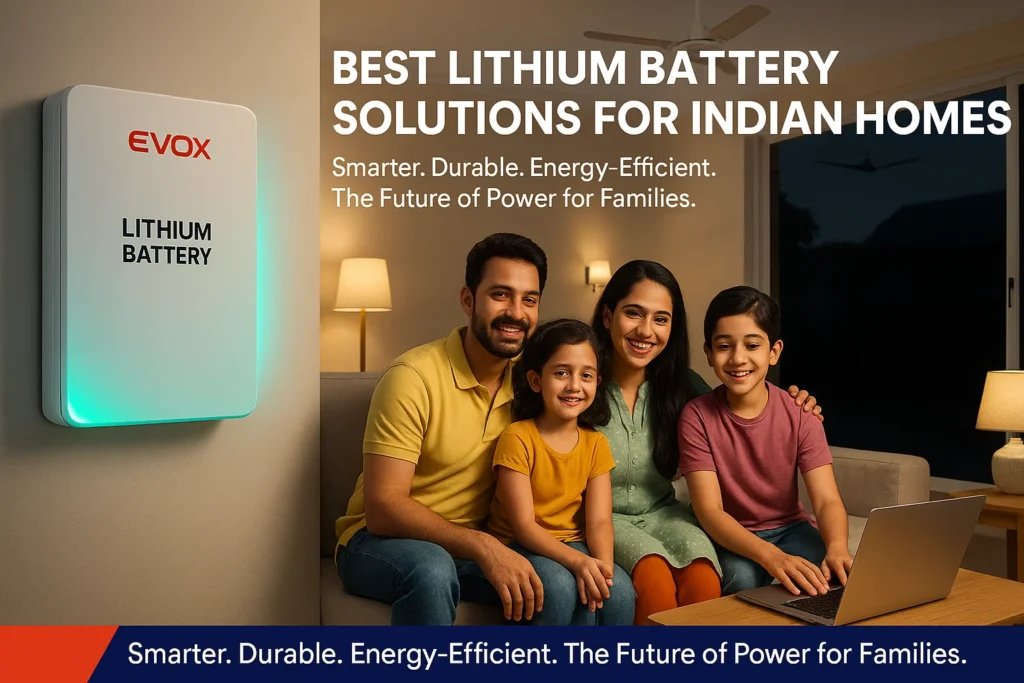
Unlike bulky, high-maintenance lead-acid batteries, lithium batteries are compact, durable, and energy-efficient, making them the perfect choice for Indian homes. Whether it’s keeping your fans and lights running during long outages or ensuring your Wi-Fi and laptop stay on during work-from-home, lithium batteries are future-ready power solutions.
🔋 1. Lithium Batteries for Inverters: Reliable Power for Every Household
Power cuts are still a daily reality in many Indian homes, especially during summers and monsoons. An inverter is no longer a luxury—it’s a necessity.
Here’s why lithium inverter batteries are better for homes:
- Longer Backup: Runs fans, lights, and appliances for hours without worry.
- Maintenance-Free: No need for regular water top-ups or acid checks.
- Space-Saving: Slim, lightweight design fits perfectly in modern apartments.
- Durable: Handles frequent power cuts without losing efficiency.
👉 Families across India are switching to lithium inverters for peace of mind during outages and years of reliable service.
🖥️ 2. Lithium Batteries for Home UPS Systems: Work & Study Without Disruptions
In today’s connected lifestyle, a stable UPS system is essential—whether for remote work, online classes, or running household gadgets. But traditional lead-acid UPS batteries often fail when you need them most.
Lithium UPS batteries are a smarter alternative:
- Instant Power: Keeps your Wi-Fi, laptops, and essential devices running without a pause.
- Long Life: Delivers 5–10 years of usage—far outlasting lead-acid batteries.
- Compact Design: Fits neatly into any corner of your home.
- Energy Efficient: Saves on electricity bills while providing reliable backup.
👉 For students, professionals, and families, a lithium UPS battery means uninterrupted learning, work, and entertainment.
🌍 Why Lithium Batteries Are the Future of Indian Homes
Switching to lithium isn’t just about convenience—it’s about smarter, greener living.
- ✅ Lasts up to 10 years (vs. 2–3 years for lead-acid)
- ✅ Charges 3x faster
- ✅ Compact & lightweight for modern homes
- ✅ Eco-friendly & recyclable
- ✅ Lower cost of ownership over time
From daily power cuts to the growing energy needs of modern households, lithium batteries are becoming the standard choice for Indian families.
🔑 Final Thoughts
The future of home energy in India is lithium-powered. By upgrading your inverter and UPS systems to lithium batteries, you’re investing in:
- Efficiency – longer backup and faster charging.
- Durability – years of dependable performance.
- Sustainability – cleaner energy with less environmental impact.
Brands like Spring Power are leading the way with high-performance lithium batteries designed for Indian conditions—from hot summers to humid monsoons.
So if you want reliable power, smart savings, and a greener lifestyle, it’s time to make the lithium shift for your home today.
Frequently Asked Questions
Why should Indian homes switch to lithium batteries for inverters?
Lithium batteries last longer, charge faster, require no maintenance, and provide consistent backup during frequent power cuts—making them ideal for Indian homes.
How long does a lithium battery last in a home inverter?
A quality lithium inverter battery can last 6–10 years, compared to just 2–3 years for traditional lead-acid batteries.
Are lithium UPS batteries safe for home use?
Yes. Lithium UPS batteries are completely safe and come with built-in protections against overcharging, overheating, and short circuits.
Do lithium batteries work well in Indian weather conditions?
Absolutely. Lithium batteries are designed to handle hot summers, humid monsoons, and frequent power cuts, making them reliable for Indian households.
Are lithium batteries more expensive than lead-acid?
The upfront cost is higher, but their long lifespan, fast charging, and zero maintenance make lithium batteries cheaper and more cost-effective in the long run.